
704-565-0621
Raleigh Aviation Worker Injury Lawyer
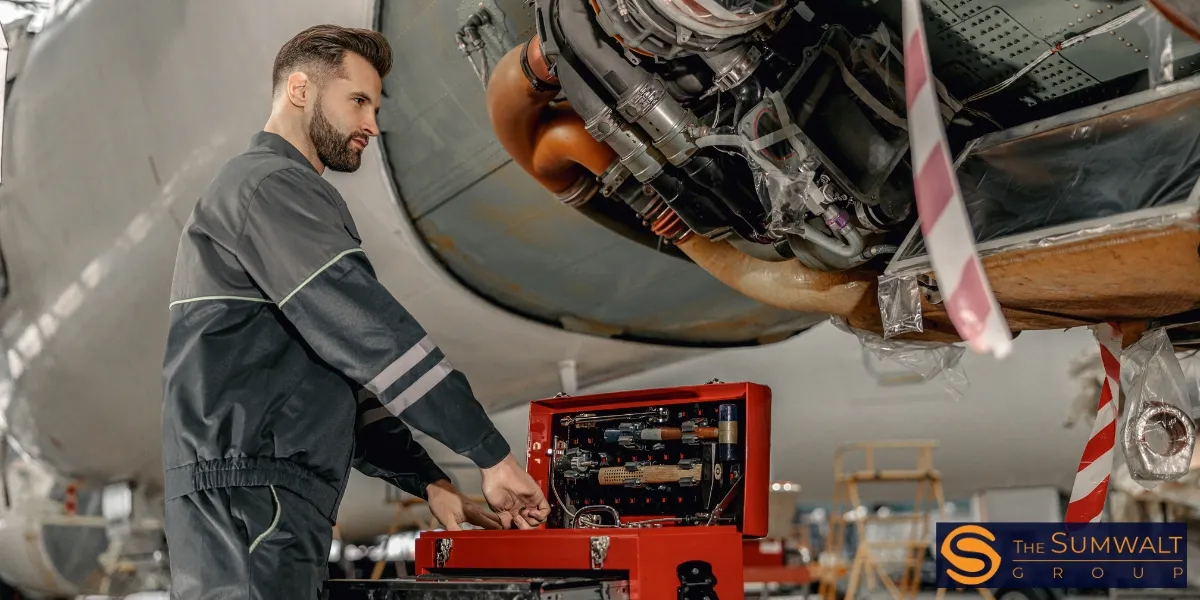
Aviation Worker Injury Attorney in Raleigh, NC
Aviation workers are exposed to countless hazards during their jobs, from slip and fall risks to equipment malfunctions. When you get injured on the job, you’ll want the advice of a Raleigh aviation worker injury lawyer to know the steps to take.
With The Sumwalt Group Workers’ Comp and Trial Lawyers, you know you’re getting a dedicated, experienced legal professional. Vernon Sumwalt has handled over 300 workers’ comp cases, and Christa Sumwalt has seen over 125 jury trials in her career. This knowledge and experience both help us know the right way to support your case.
Things to Know About Raleigh Aviation Worker Injury Laws
Raleigh is served by the Raleigh-Durham International Airport, which boarded 642,195 passengers in November 2025. Such a populous airport must be supported by plenty of aviation workers in many different roles.
In fact, the transportation industry provides over 128,000 jobs in the Raleigh area. From airline pilots and air traffic controllers to baggage handlers and support staff, the aviation industry employs thousands of people in and around Raleigh. And these employees are protected under workers’ comp and aviation worker injury laws.
You should know that after an injury, it’s vital to inform your employer as quickly as possible so that you can be eligible for all possible benefits. If they don’t receive formal written notice within 30 days of the accident and injury, you may not be able to obtain workers’ comp payments.
It’s also important to follow up with your given medical team as often as necessary and make sure you’re getting proper care. Keep track of any appointments, medical records, and other documents relevant to your injury. These might be necessary pieces of evidence for your case.
If you aren’t able to see the medical provider approved by your employer, you might be able to get coverage for a different provider. Just be sure to get the permission of your employer, their insurance carrier, or the Industrial Commission first.
Follow your employer’s policies for any required forms or steps to take after an injury. Be honest with your medical team, and make sure they’re aware that you’re being treated for a workplace injury. You might also want to keep a journal of your symptoms and how they impact you, in case you decide to file a personal injury claim.

Potential Benefits of a Workplace Injury
In North Carolina, you are entitled to multiple types of benefits by state law. You might prefer to hire an aviation worker injury lawyer so they can walk you through the different benefits and help you figure out what your case is eligible for.
First, employers are often required to cover medical care for workplace injuries. They will have their own preferred medical provider, or their insurance carrier will. This helps you get the care you need without worrying about daunting medical bills.
The other common type of workers’ comp benefit is indemnity or lost wages. Starting 14 days after your employer is officially notified of your accident and injury, you can receive payments, which are paid weekly thereafter. The exact value of indemnity benefits depends on the extent of your injury and your typical wages.
In the event that you need rehabilitation services to return to work, you also might be eligible for those. Vocational rehabilitation can be provided if recommended by your medical professional and approved by the insurance carrier or your employer.
Hire an Aviation Worker Injury Lawyer to Get Your Compensation
Approaching injury cases alone can be an unnecessary challenge. An attorney from The Sumwalt Group Workers’ Comp and Trial Lawyers can help you navigate your case and take some of the stress off your back.
We’ve seen many types of worker injuries across different industries. The three most common causes of flight attendant injuries are overexertion, transportation incidents, and contact with objects or equipment. We can help you tackle these and more during your case.
FAQs
What Is the Aviation Liability Law?
There is not one specific aviation liability law, but Chapter 63 of the North Carolina statutes contains most of the laws that handle liability in the aviation workplace. These cover important definitions, procedures, and policies around aviation liability for both employees and customers of airlines. Together, these provisions establish how aviation-related injuries and disputes are evaluated under North Carolina law.
What Qualifies as an Aviation Incident?
An incident and an accident are distinct. Aviation incidents typically do not result in serious injury or damage, but are still events that are out of the norm. An accident is an event that leads to severe injury or damage to a person or property. Aviation incidents still may result in minor injuries.
What Is Negligence in Aviation Law?
Negligence in Aviation Law is when an employee or employer fails to reasonably fulfill their duties, either to the public or to their employees. This can include not putting up proper hazard signs, creating unsafe or hostile environments, or ignoring job duties in a way that can cause harm to others. In personal injury claims, negligence must be proven in order for the claim to be successful.
What Is the Distress Code for Aviation?
The most common aviation distress code is repeating MAYDAY three times. For urgent situations, which do not require as much emergency intervention as distress, the code is PAN-PAN, also repeated three times. In situations where no contact can be made with an air traffic facility, one might also use code 7700.
Get Professional Legal Aid
The legal team at The Sumwalt Group Workers’ Comp and Trial Lawyers has handled hundreds of workers’ comp cases and brings that experience to helping all of our clients. We value professionalism and compassion for each case that we take on.
For employees of Raleigh’s most common aviation employers, like Advanced Aerospace Solutions or Tac Air, for baggage handlers at RDU, and for all other aviation workers in the Raleigh area, legal aid can be invaluable. Whether you’re tackling workers’ comp or a personal injury claim, our team can help you bring your case forward.
Schedule a consultation with us today to see how we can help you. Or, visit our main office in Charlotte to get advice when you need it most.

© 2026 The Sumwalt Group Workers' Comp and Trial Lawyers. All rights reserved Disclaimer | Site Map | Privacy Policy
*Images are obtained under license from Canva and other third-party stock image providers, with attribution included where required.
Digital Marketing By: 